Skip to content

Technical drafts · Ironwork · masonry interfaces

Intended readers: Conservation architects, structural engineers, stonemasons and metalwork specialists

Unreviewed technical draft — not a published article

Written for professional readers with section-level citations; individual claims and survey interpretations still require verification. No named independent technical reviewer or owner approval exists yet. Search engines are instructed not to index this draft; actual exclusion is not verified. It must not be relied on as treatment advice. Interventions should be designed and carried out by suitably qualified conservators and specialists.

Open questions for the reviewer (2)
  • Reviewer to confirm whether specific guidance on re-leading or alternative setting materials should be cited from Practical Building Conservation volumes (not yet checked).
  • No load or structural capacity statements are made; these require an engineer.

Gates, railings and masonry: rust jacking, leaded fixings and survey of interfaces

A draft examination of ironwork–masonry interfaces: rust jacking at sockets and cramps, the role and failure of lead fixings, survey records and repair-option documentation. It does not establish how frequently interface damage occurs relative to other defects.

Rust jacking: mechanism and evidence

Cited source statements; survey interpretation requires review

Historic England’s metal-window guidance reports rust expansion up to seven times the volume of sound metal. It does not supply a measured expansion factor for a particular masonry socket or cramp. Where iron is embedded or confined, this expansion exerts pressure. The webinar describes wrought iron corrosion as voluminous and uses ‘rust jacking’ for this expansive damage; Historic England uses the same term for armature corrosion splitting statues. At masonry interfaces, record cracked or spalled stone around sockets, lifted copings, displaced plinths and railings out of line as observations. The sources cited here do not establish rust jacking as the cause of each sign; competing explanations and a specialist diagnosis remain necessary.

Sources: [1] Historic England[2] Historic England[3] Historic England

Cramps and fixings in stone

Cited source statements; survey interpretation requires review

Historic England’s monuments guidance states that corrosion of metal cramp fixings can fracture stone or push slabs apart, citing its Waterloo Memorial (Wigan) case study on corroded wrought-iron cramps. Where rebuilding is needed it describes removing decayed or defective fixings and replacing cramps and fixings with stainless-steel versions, with all re-fixing by suitably experienced practitioners using sympathetic materials.

Sources: [4] Historic England

Lead sockets and plugs

Cited source statements; survey interpretation requires review

Railings and balusters were often set into stone with lead. The webinar illustrates a composite railing where corrosion of the wrought iron pushed out and split the lead plug joining it to cast iron. Survey observations: lead proud of or split around the bar; open gaps letting water in; rust staining on stone; cracks radiating from sockets; replacement with cement or resin in previous repairs (record, do not remove). Note that molten-lead work and removal of old lead carry health and safety requirements; any re-leading is specialist work.

Sources: [2] Historic England

Survey method for interfaces

Editorial synthesis drawing on cited principles

The webinar emphasises that condition surveying should identify the underlying causes driving visible problems and that a detailed report informs the level and form of intervention; Historic England’s principles describe a staged assessment, an overview first and then targeted detailed investigation. For each bay or panel record: material per component; fixing type at every interface (leaded socket, pin, cramp, bolt, collar, tenon); condition of metal at the interface; condition of stone around it; water paths; vertical and horizontal alignment; previous repairs and their materials; and photographs with scale and location. Identify the gate’s hinges, pins and stops, and any movement — observed only, not tested by forcing.

Sources: [5] Historic England[2] Historic England

Documenting repair options

Cited source statements; survey interpretation requires review

Historic England’s principles: remedy the cause, retain significant fabric, minimise change and avoid unnecessary replacement. Its materials guidance requires compatible repair materials. For cast elements, its statuary page notes that metal stitching or careful pre-warmed welding may be possible but not always. A repair-option record should list per defect: cause; options (e.g. local dismantling and re-setting, piecing-in, replacement of failed fixings, stitching or welding by specialist where suitable); what each retains and loses; reversibility; consent implications; and who must design or approve the work (conservator, engineer, mason).

Sources: [5] Historic England[6] Historic England[7] Historic England

Evidence gaps and research questions

Evidence gap — no checked source yet

Evidence gap: the cited Historic England sources describe the mechanism of rust jacking, cramp corrosion and leaded fixings, but they do not provide the following, and this chapter does not supply it. 1. Structural capacity. No statement is made about the load capacity of a corroded post, socket or cramp; that requires a structural engineer. 2. Setting materials. Guidance on re-leading or alternative setting materials (for example in Practical Building Conservation) has not yet been checked and is therefore not cited. 3. Survey thresholds. No cited source gives a measured threshold of displacement or cracking at which opening up becomes necessary; the decision remains a documented professional judgement. These questions are for the independent technical reviewer.

Sources and the claims they support

  1. [1] Historic England, Repair or Change Windows in an Older Home (n.d.). Link checked 2026-11-18.

    Passage: ‘Rust expands up to seven times the volume of sound metal’.

    Supports: Volume expansion of rust.

  2. [2] Historic England, Conservation of Architectural Metalwork, Part 2: Iron Gates and Railings (webinar transcript) (2021). Link checked 2026-11-18.

    Passage: Wrought iron corrosion voluminous and rust jacking; split lead plug at Wimpole Hall; condition surveying identifies underlying causes; gates removed without listed building consent.

    Supports: Rust jacking, lead fixings, survey-led reports, consent.

  3. [3] Historic England, Issues Common to all Metal Statues (n.d.). Link checked 2026-11-15.

    Passage: ‘Corroded armatures’ — rust jacking can split sculpture.

    Supports: Rust jacking terminology and mechanism.

  4. [4] Historic England, Caring for Historic Cemetery and Graveyard Monuments (n.d.). Link checked 2026-11-15.

    Passage: Corrosion of metal cramp fixings fractures stone; Waterloo Memorial, Wigan; replacement with stainless steel fixings; experienced practitioners, sympathetic materials.

    Supports: Cramp corrosion and re-fixing approach.

  5. [5] Historic England, Principles of Repair for Historic Buildings (n.d.). Link checked 2026-11-18.

    Passage: Remedy cause; staged assessment; minimal change; retreatable interventions.

    Supports: Survey and decision principles.

  6. [6] Historic England, Materials for Historic Building Repairs (2026). Link checked 2026-11-15.

    Passage: Compatibility of repair materials.

    Supports: Material compatibility in repairs.

  7. [7] Historic England, Cast Iron Statuary (2022). Link checked 2026-11-18.

    Passage: Metal stitching or careful welding; pre-warming; not always achievable.

    Supports: Case-specific cast iron repair options.
Related library entries

Claim-level evidence audit

18 November 2026 · 16 selected assessments. Direct source support is not independent technical approval.

All 35 sentence candidates classified; 35 literal factual or mixed clauses recorded. 35 clauses lack a new atom-specific assessment; earlier compound assessments are linked separately, not counted as proof of every clause. Independent semantic reconciliation remains open.

Evidence and open reviewer questions
  1. AH-IN-001 · Chapter section

    Window-page expansion statement does not establish a socket-specific pressure or expansion factor.

    Partial support — scope remains open.

    Repair or Change Windows in an Older Home · Rust does not mean replacement is necessary. Original page read 2026-11-18. No source image rights inferred.

    Assessment: Window statement supports expansive rust but not masonry measurement.

    Reviewer question: What evidence supports the particular socket mechanism and magnitude?

  2. AH-IN-002 · Chapter section

    Wimpole Hall example describes wrought-iron corrosion splitting a lead plug joining cast and wrought elements.

    Direct entailment — technical approval still required.

    Conservation of Architectural Metalwork, Part 2: Iron Gates and Railings (webinar transcript) · Rupert [37:43], paragraph beginning More cast iron. Original page read 2026-11-18. No source image rights inferred.

    Assessment: Specific example only; no prevalence inference for all stone sockets.

    Reviewer question: Confirm slide/recording and avoid generalising the example.

  3. AH-IN-003 · Chapter section

    Listed masonry signs are observations, not proof of rust jacking.

    Editorial application, not a source assertion.

    Principles of Repair for Historic Buildings · Effective repair, detailed examination paragraph. Original page read 2026-11-18. No source image rights inferred.

    Assessment: Building repair principle supports investigation; does not establish this symptom classifier.

    Reviewer question: Which alternative causes and investigations distinguish this damage?

  4. AH-IN-004 · Chapter section

    Historic building repair principles favour remedying causes, retaining fabric and minimising change.

    Direct entailment — technical approval still required.

    Principles of Repair for Historic Buildings · Opening objective and conservative approach paragraphs. Original page read 2026-11-18. No source image rights inferred.

    Assessment: Direct building principle; project application still requires review.

    Reviewer question: How are significance and alternatives documented for this interface?

  5. AH-IN-005 · Chapter section

    Corrosion of metal cramp fixings can fracture stone.

    Direct entailment — technical approval still required.

    Caring for Historic Cemetery and Graveyard Monuments · Common problems, corrosion of metal cramp fixings paragraph. Original page read 2026-11-18. No source image rights inferred.

    Assessment: Can, not diagnosis of a particular socket.

    Reviewer question: Does opening-up establish corroded cramps at this crack?

  6. AH-IN-006 · Chapter section

    Cramp corrosion can push slabs apart.

    Direct entailment — technical approval still required.

    Caring for Historic Cemetery and Graveyard Monuments · Same paragraph, second damage outcome. Original page read 2026-11-18. No source image rights inferred.

    Assessment: Distinct displacement assertion, not capacity evidence.

    Reviewer question: What distinguishes cramp expansion from settlement here?

  7. AH-IN-007 · Chapter section

    Monument rebuilding normally includes replacing defective cramps with stainless-steel versions.

    Direct entailment — technical approval still required.

    Caring for Historic Cemetery and Graveyard Monuments · Dismantling and rebuilding larger monuments. Original page read 2026-11-18. No source image rights inferred.

    Assessment: Monument rebuilding scope only; not a blanket gate specification.

    Reviewer question: Is replacement necessary and is this monument guidance transferable?

  8. AH-IN-008 · Chapter section

    Monument re-fixing and repairs should use sympathetic materials.

    Direct entailment — technical approval still required.

    Caring for Historic Cemetery and Graveyard Monuments · Dismantling and rebuilding larger monuments. Original page read 2026-11-18. No source image rights inferred.

    Assessment: Explicit requirement in monument context.

    Reviewer question: What compatibility evidence defines sympathetic at this interface?

  9. AH-IN-009 · Chapter section

    Monument re-fixing requires suitably experienced practitioners.

    Direct entailment — technical approval still required.

    Caring for Historic Cemetery and Graveyard Monuments · Repairing larger monuments, final paragraph. Original page read 2026-11-18. No source image rights inferred.

    Assessment: Competence requirement explicit, not a named credential.

    Reviewer question: Who has evidenced the required competence?

  10. AH-IN-010 · Chapter section

    Condition surveying should identify underlying causes, not only visible issues.

    Direct entailment — technical approval still required.

    Conservation of Architectural Metalwork Part 2 · Alex [19:32], condition assessment paragraph. Original page read 2026-11-18. No source image rights inferred.

    Assessment: Published transcript explicit; spelling anomalies not used for metallurgy.

    Reviewer question: What investigation substantiates each proposed cause?

  11. AH-IN-011 · Chapter section

    A detailed condition report informs the level and form of intervention.

    Direct entailment — technical approval still required.

    Conservation of Architectural Metalwork Part 2 · Alex [19:32], same paragraph. Original page read 2026-11-18. No source image rights inferred.

    Assessment: Separate decision-support assertion.

    Reviewer question: Does the report record alternatives and uncertainties?

  12. AH-IN-012 · Chapter section

    The first assessment stage establishes an overview of significance and general condition.

    Direct entailment — technical approval still required.

    Principles of Repair for Historic Buildings · Investigations and assessment, two-stage approach paragraph. Original page read 2026-11-18. No source image rights inferred.

    Assessment: Overview stage explicitly described.

    Reviewer question: Is significance documented before detailed sampling?

  13. AH-IN-013 · Chapter section

    The second assessment stage may be detailed and targeted.

    Direct entailment — technical approval still required.

    Principles of Repair for Historic Buildings · Same two-stage paragraph, final sentence. Original page read 2026-11-18. No source image rights inferred.

    Assessment: Second-stage focus explicit, not a fixed survey protocol.

    Reviewer question: Which uncertainties justify targeted investigation?

  14. AH-IN-014 · Chapter section

    Repair interventions should be reversible where technically feasible, or at least retreatable.

    Direct entailment — technical approval still required.

    Principles of Repair for Historic Buildings · Approaches to repair, third bullet. Original page read 2026-11-18. No source image rights inferred.

    Assessment: Feasibility qualifier retained.

    Reviewer question: What can be retreated without loss at this interface?

  15. AH-IN-015 · Chapter section

    Repair materials should be compatible with existing fabric.

    Direct entailment — technical approval still required.

    Materials for Historic Building Repairs · Choice of repair materials, physical properties paragraph. Original page read 2026-11-18. No source image rights inferred.

    Assessment: Compatibility principle, not approval of a setting product.

    Reviewer question: Which physical properties require compatibility testing?

  16. AH-IN-016 · Chapter section

    No checked source establishes load capacity for a particular corroded socket or cramp.

    Evidence gap.

    Caring for Historic Cemetery and Graveyard Monuments · Common problems, cramp damage paragraph: no load test or capacity value. Original page read 2026-11-18. No source image rights inferred.

    Assessment: Damage mechanism is not evidence of residual structural capacity.

    Reviewer question: What engineer-designed inspection and analysis establishes capacity?

Owner's published field record · not independently validated

Observed in Arts Heritage practice

What the photographs show
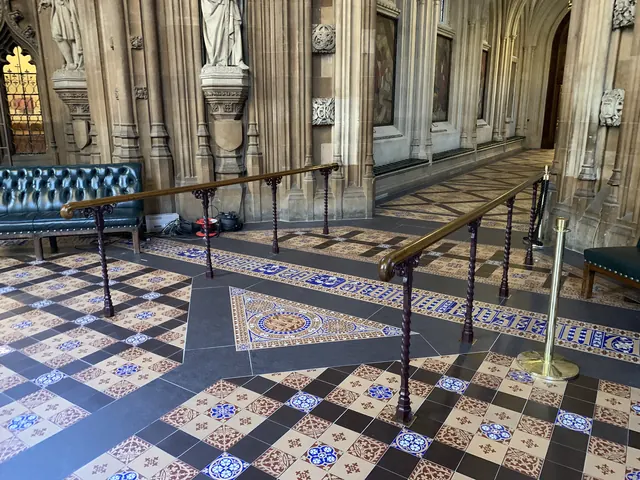
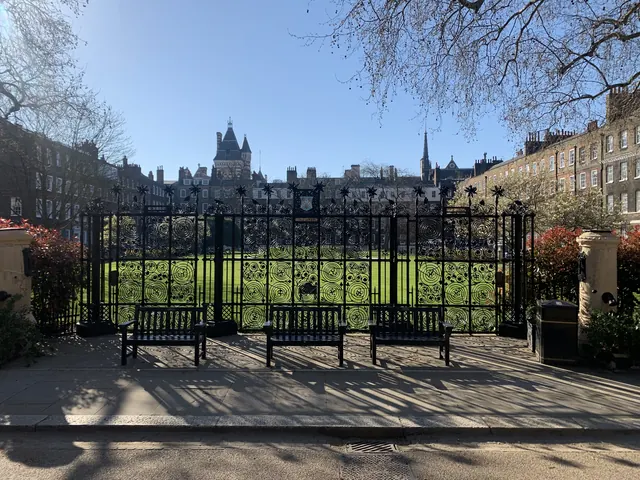
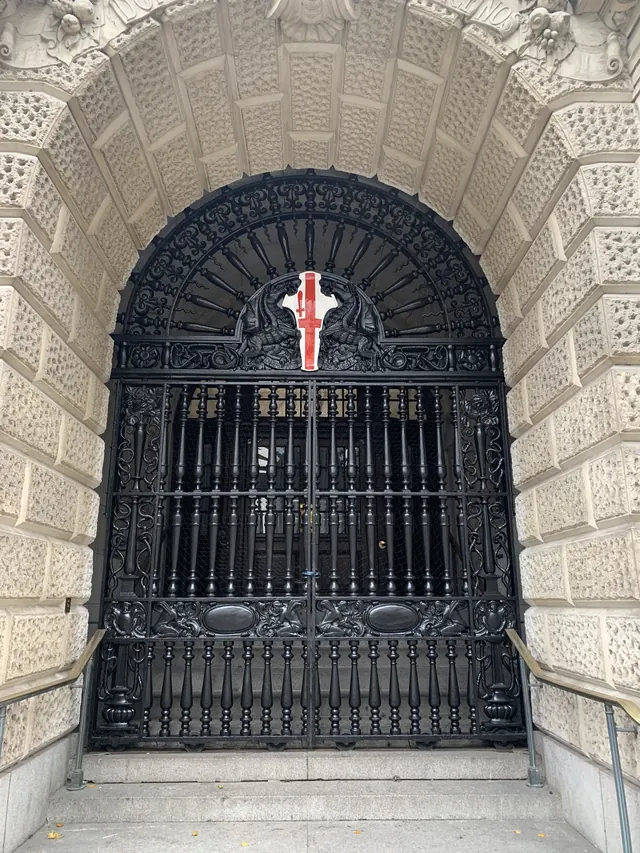
Architectural ironwork at places named in Arts Heritage's gallery captions (for example The Old Bailey, Lincoln's Inn, Highgate Cemetery).
Not evidence for
Whether an element is wrought iron, cast iron or steel, its date, or what work was done. Material cannot be identified from a photograph; the captions name places only.
Status
Photographs and captions originally published by Arts Heritage at artsheritage.co.uk ↗. Mechanisms and treatments described in the guidance above are drawn from the cited literature, not proved by these images.
See all photographs in the Practice Archive →