Skip to content

Technical drafts · Finishes · coatings · patination

Intended readers: Conservators, architects and specifiers evaluating finishes on historic metalwork

Unreviewed technical draft — not a published article

Written for professional readers with section-level citations; individual claims and survey interpretations still require verification. No named independent technical reviewer or owner approval exists yet. Search engines are instructed not to index this draft; actual exclusion is not verified. It must not be relied on as treatment advice. Interventions should be designed and carried out by suitably qualified conservators and specialists.

Open questions for the reviewer (2)
  • NPS Brief 28, pages 6–7 and Figure 9, has been checked against original page images for paint investigation; transfer from historic interiors to outdoor metalwork remains a reviewer question.
  • No product names, thicknesses or coating systems are recommended; deliberately left to specification.

Historic coatings and patination: evidence of original finish and how to brief its evaluation

Why the existing surface is evidence, how coatings degrade, what layer analysis is for, and how to frame professional evaluation of coating and patination options without uncontrolled treatment recipes.

The surface is evidence

Cited source statements; survey interpretation requires review

CCI notes that metals can be artificially finished or patinated, that heat-produced colours on steel reveal technique, and that finishes and patinas are often extremely thin and easily damaged. Historic England records that cast-iron statues and garden objects were generally painted to resemble other materials such as stone or bronze, and directs that before any intervention the existing paint should be sampled and analysed to identify and record original schemes, with areas of sound historic paint recorded and protected during cleaning. Together these establish the professional default: assume the existing stratigraphy may contain the original finish until analysis shows otherwise.

Sources: [1] Canadian Conservation Institute[2] Historic England

Layer analysis: what it answers

Partly supported; includes interpretation

Historic England calls for sampling and analysis to identify and record original paint schemes on cast-iron statuary. The cited page does not specify which analytical methods establish layer sequence, gilding, hazardous constituents or adhesion; those capabilities require a checked methods source. Brief the analyst with questions: What was the first scheme? Which layers are sound and adherent? Is there evidence of earlier corrosion beneath paint? Are there hazardous components such as lead? Record sample locations on a drawing or photograph so results can be traced.

Sources: [2] Historic England

How coatings fail on metalwork

Cited source statements; survey interpretation requires review

Failure concentrates where coating is thin or water lingers: the webinar notes that thin repoussé and sheet ornament is often the first to suffer after coating failure because it is hard to coat effectively, especially on mating faces; Historic England notes corrosion on cast iron starts where water collects around bases and joints. On outdoor bronze, the Getty’s research shows that even established wax products change in performance, so ‘coating failure’ may reflect product change as well as maintenance. Record: blistering, flaking to bare metal, rust bleed at joints, chalking, cracking, loss on edges and arrises, and build-up obscuring detail.

Sources: [3] Historic England[2] Historic England[4] J. Paul Getty Trust

A checked methods source: scope and limits

Partly supported; includes interpretation

Sara B. Chase’s National Park Service Preservation Brief 28 (June 1992), on historic interiors, describes specialists with training and field experience conducting paint investigations. Page 6 names field sampling, cross-section analysis, and fluorescent and chemical staining as investigation procedures; it combines these with written documentation, verbal research and visual information. These are descriptions of professional investigation, not instructions for sampling or treatment. Pages 6–7 explain that a complete layer sequence, combined with other research, can associate building alterations with paint layers. The brief says this can potentially provide date ranges; it does not say a cross-section alone dates a coating. Page 7 also describes identifying paint types and colours, including glazes and decorative schemes, and says knowing a binder can often help explain paint failure. It warns that simpler on-site analysis has limited usefulness and is less precise than laboratory analysis with a good microscope. Figure 9 shows on-site sample collection followed by laboratory microscopy; the original printed pages and caption were visually checked, not accepted from OCR alone. The brief addresses interiors, including metal radiators and railings. It is not validation of every technique on an outdoor gate or sculpture, and does not establish that one cross-section determines lead content, adhesion or an original outdoor patina. Those questions still need a defined analytical brief and object-specific evidence. No sampling quantities, chemical recipes or treatment sequences are given here.

Sources: [7] National Park Service; Sara B. Chase

Preparation methods carry irreversible risk

Cited source statements; survey interpretation requires review

The webinar warns that blasting can be aggressive and damage very fine sheet work, and that flame cleaning and blasting both require special controls where lead paint is present. CCI warns that thin finishes can be damaged by even small amounts of abrasion or chemical cleaning. Preparation choice therefore belongs in a specialist method statement that states what will be lost and how original evidence will be recorded or retained.

Sources: [3] Historic England[1] Canadian Conservation Institute

Selection constraints, not recipes

Editorial synthesis drawing on cited principles

Historic England requires repair materials to be compatible with existing fabric and to consider durability and future maintenance; its principles favour retreatable interventions. The Getty programme shows that performance data for protective coatings on outdoor bronze is still being developed. A brief should ask the specialist to justify: compatibility with retained layers and substrate; evidence for performance in this exposure; maintenance cycle and access; reversibility or retreatability; appearance relative to the documented original scheme; and health and safety. This chapter intentionally gives no formulations or application instructions.

Sources: [5] Historic England[6] Historic England[4] J. Paul Getty Trust

Re-patination and re-painting decisions

Evidence gap — no checked source yet

Evidence gap: the checked sources do not set criteria for when re-patinating bronze or reinstating a historic paint scheme is justified. These decisions involve significance, documentary evidence, community and owner expectations and consent. Reviewer guidance and a published source are required before this section can give direction.

Sources and the claims they support

  1. [1] Canadian Conservation Institute, Caring for metal objects (n.d.). Link checked 2026-11-18.

    Passage: Finishes and patinas section; heat colours on steel; thin finishes damaged by abrasion or chemical cleaning.

    Supports: Original finishes are evidence and vulnerable.

  2. [2] Historic England, Cast Iron Statuary (2022). Link checked 2026-11-18.

    Passage: Painted to resemble stone or bronze; ‘Before any intervention, sample and analyse the existing paint…’; corrosion where water collects.

    Supports: Paint analysis before intervention; failure locations.

  3. [3] Historic England, Conservation of Architectural Metalwork, Part 2: Iron Gates and Railings (webinar transcript) (2021). Link checked 2026-11-18.

    Passage: Repoussé leaf corrosion profile after coating failure; blasting damage to fine sheet; lead paints with blasting/flame cleaning.

    Supports: Where coatings fail; preparation risks.

  4. [4] J. Paul Getty Trust, Coatings Research on the Stark Collection (n.d.). Link checked 2026-11-17.

    Passage: Evaluating wax and acrylic coatings; commercial wax effectiveness decreased.

    Supports: Coating performance evidence is evolving.

  5. [5] Historic England, Materials for Historic Building Repairs (2026). Link checked 2026-11-15.

    Passage: Materials must be compatible with existing fabric; durability and future maintenance.

    Supports: Selection constraints.

  6. [6] Historic England, Principles of Repair for Historic Buildings (n.d.). Link checked 2026-11-18.

    Passage: Reversible or at least retreatable interventions.

    Supports: Retreatability as a selection criterion.

  7. [7] National Park Service; Sara B. Chase, Preservation Brief 28: Painting Historic Interiors (1992). Link checked 2026-11-18.

    Passage: Printed pages 6–7, Paint Investigation and Figure 9; original PDF page images visually checked.

    Supports: Professional paint investigation, layer sequence with documentary research, and limits of on-site analysis; interior scope retained.
Related library entries

Claim-level evidence audit

18 November 2026 · 14 selected assessments. Direct source support is not independent technical approval.

All 37 sentence candidates classified; 47 literal factual or mixed clauses recorded. 47 clauses lack a new atom-specific assessment; earlier compound assessments are linked separately, not counted as proof of every clause. Independent semantic reconciliation remains open.

Evidence and open reviewer questions
  1. AH-CO-001 · Chapter section

    Cast-iron statuary page describes paint imitating stone or bronze and colourful schemes.

    Direct entailment — technical approval still required.

    Cast Iron Statuary · Opening paragraph under Cast Iron Statuary. Original page read 2026-11-18. No source image rights inferred.

    Assessment: Historical statement limited to the object class described.

    Reviewer question: Does surviving paint evidence support the specific object scheme?

  2. AH-CO-002 · Chapter section

    Statuary guidance calls for paint sampling/analysis and protection of sound historic paint.

    Direct entailment — technical approval still required.

    Cast Iron Statuary · Treatment and repair, opening paragraph. Original page read 2026-11-18. No source image rights inferred.

    Assessment: Explicit recording/protection direction; no sampling procedure.

    Reviewer question: Agree sample locations and retained evidence with conservator.

  3. AH-CO-003 · Chapter section

    Layer sequence, gilding, hazards and adhesion capabilities are not established by the cited page.

    Evidence gap.

    Cast Iron Statuary · Treatment and repair, opening paragraph. Original page read 2026-11-18. No source image rights inferred.

    Assessment: Source only states identifying schemes; unsupported analytic capability assertion replaced by explicit gap.

    Reviewer question: Which checked methods guidance supports each requested analytical result?

  4. AH-CO-004 · Chapter section

    Webinar warns aggressive blasting can damage fine sheetwork and notes lead-related controls for blasting/flame cleaning.

    Direct entailment — technical approval still required.

    Conservation of Architectural Metalwork, Part 2: Iron Gates and Railings (webinar transcript) · Alex [56:50], paragraph beginning I put these up. Original page read 2026-11-18. No source image rights inferred.

    Assessment: Hazard warning verified, not a treatment prescription.

    Reviewer question: Check recording and applicable current safety guidance before specification.

  5. AH-CO-005 · Chapter section

    NPS describes trained and field-experienced specialists conducting paint investigations.

    Direct entailment — technical approval still required.

    Preservation Brief 28: Painting Historic Interiors, pp. 6–7 · Printed p. 6, Paint Investigation, second paragraph. Original page read 2026-11-18. No source image rights inferred.

    Assessment: Original page visually proofread.

    Reviewer question: Does the appointed analyst have relevant substrate experience?

  6. AH-CO-006 · Chapter section

    NPS names field sampling as a professional investigation procedure.

    Direct entailment — technical approval still required.

    Preservation Brief 28: Painting Historic Interiors, pp. 6–7 · Printed p. 6, same paragraph. Original page read 2026-11-18. No source image rights inferred.

    Assessment: Names procedure only, no sampling recipe.

    Reviewer question: How will sample relevance and permissions be recorded?

  7. AH-CO-007 · Chapter section

    NPS names cross-section analysis as a professional investigation procedure.

    Direct entailment — technical approval still required.

    Preservation Brief 28: Painting Historic Interiors, pp. 6–7 · Printed p. 6, same paragraph. Original page read 2026-11-18. No source image rights inferred.

    Assessment: Original print confirms cross-section wording across line break.

    Reviewer question: What question will cross-section analysis answer?

  8. AH-CO-008 · Chapter section

    NPS names fluorescent and chemical staining in paint investigation.

    Direct entailment — technical approval still required.

    Preservation Brief 28: Painting Historic Interiors, pp. 6–7 · Printed p. 6, same paragraph. Original page read 2026-11-18. No source image rights inferred.

    Assessment: Procedure names, not chemicals or preparation instructions.

    Reviewer question: Which validated method suits the proposed analytical question?

  9. AH-CO-009 · Chapter section

    NPS combines documentary, verbal and visual research with field findings.

    Direct entailment — technical approval still required.

    Preservation Brief 28: Painting Historic Interiors, pp. 6–7 · Printed p. 6, same paragraph final sentence. Original page read 2026-11-18. No source image rights inferred.

    Assessment: Combined evidence rather than laboratory-only inference.

    Reviewer question: Are documentary records reconciled with sample locations?

  10. AH-CO-010 · Chapter section

    A full paint-layer sequence with other research can associate alterations with paint layers.

    Direct entailment — technical approval still required.

    Preservation Brief 28: Painting Historic Interiors, pp. 6–7 · Printed p. 7, left column continuation below Figure 10. Original page read 2026-11-18. No source image rights inferred.

    Assessment: Other research qualifier retained; not a cross-section-only date.

    Reviewer question: What independent chronology correlates the layers?

  11. AH-CO-011 · Chapter section

    Paint investigation can potentially provide date ranges for building changes.

    Direct entailment — technical approval still required.

    Preservation Brief 28: Painting Historic Interiors, pp. 6–7 · Printed p. 7, same continuation paragraph. Original page read 2026-11-18. No source image rights inferred.

    Assessment: Potentially; not guaranteed or an absolute coating date.

    Reviewer question: Which evidence constrains rather than merely suggests a range?

  12. AH-CO-012 · Chapter section

    NPS says paint analysis can identify paint types and colours, including glazes and decorative schemes.

    Direct entailment — technical approval still required.

    Preservation Brief 28: Painting Historic Interiors, pp. 6–7 · Printed p. 7, left column final paragraph. Original page read 2026-11-18. No source image rights inferred.

    Assessment: Interior paint scope; no promise to identify outdoor patination.

    Reviewer question: What method and evidence support the identified scheme?

  13. AH-CO-013 · Chapter section

    Knowing a paint binder can often help explain paint failure.

    Direct entailment — technical approval still required.

    Preservation Brief 28: Painting Historic Interiors, pp. 6–7 · Printed p. 7, right column opening paragraph. Original page read 2026-11-18. No source image rights inferred.

    Assessment: Often, not a sufficient diagnosis alone.

    Reviewer question: What environmental or substrate causes remain alternatives?

  14. AH-CO-014 · Chapter section

    Simpler on-site analysis is less precise than laboratory analysis with a good microscope.

    Direct entailment — technical approval still required.

    Preservation Brief 28: Painting Historic Interiors, pp. 6–7 · Printed p. 7, right column on-site analysis paragraph. Original page read 2026-11-18. No source image rights inferred.

    Assessment: Comparison within the brief, not all portable instruments.

    Reviewer question: Is the proposed on-site method within this comparison’s scope?

Owner's published field record · not independently validated

Observed in Arts Heritage practice

What the photographs show
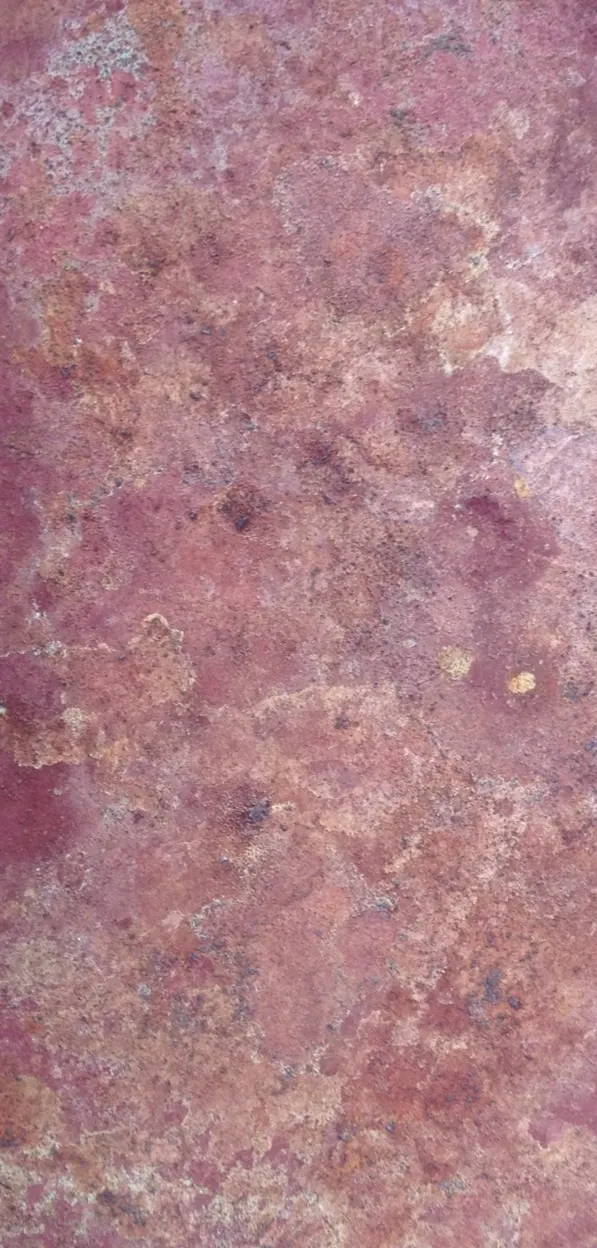
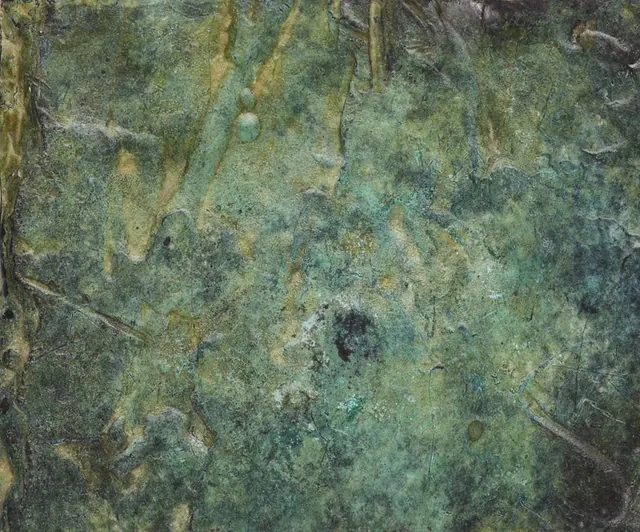
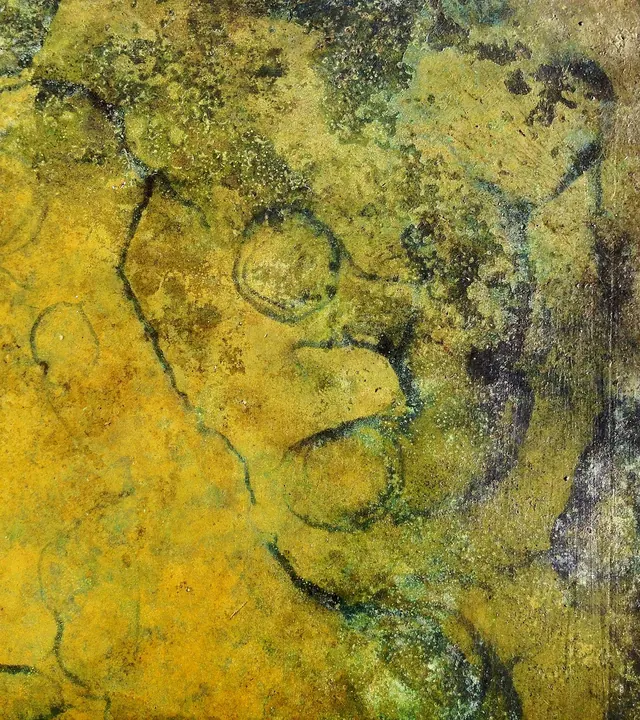
Bronze test plates labelled with a plate ID on Arts Heritage's patination page. They show that a range of artificial patina colours was produced in the workshop.
Not evidence for
A recipe, chemical, temperature or colour standard. Photographed colour is not calibrated — lighting, camera, screen, plate age and storage all change it.
Status
Photographs and captions originally published by Arts Heritage at artsheritage.co.uk ↗. Mechanisms and treatments described in the guidance above are drawn from the cited literature, not proved by these images.

Individual plates: B32 · YB1 · P1 · HY1 · GA1 · LB · BBAU · P2 · R0 · B6 · GR1. Colour in these photographs is not standardised (no colour chart, lighting or camera profile is published), so they cannot be used to match or specify a patina.

See all photographs in the Practice Archive →