
Arts Heritage Academy CPD Course
Bronze Sculpture Conservation Essentials
A structured, self-paced CPD learning pathway covering principles, inspection, risk recognition and maintenance decision-making for bronze sculpture.
About this course
Bronze Sculpture Conservation Essentials is a structured, self-paced CPD course for anyone responsible for the care of bronze sculpture in private, public or institutional settings. It sets out the conservation principles, inspection routines and risk-recognition skills needed to look after bronze sculpture confidently and to know when specialist support is required.
Who this course is for
- Custodians and owners of bronze sculpture.
- Architects, surveyors and heritage consultants.
- Conservation officers and collections staff.
- Contractors and maintenance teams working on outdoor sculpture.
- Students moving into conservation, heritage or public art roles.
What you will learn
- How bronze is made, finished and patinated, and why this matters for care decisions.
- How to identify common surface conditions, patina layers and active deterioration.
- How environmental, pollution and biological factors affect bronze sculpture.
- How to carry out a non-invasive condition inspection and record findings.
- How to plan proportionate, reversible maintenance and recognise treatment limits.
- When and how to escalate to an experienced conservation professional.
Your progress
0% complete · 0/6 modules · Estimated study time about 3 hours · certificate CPD figure 3–4 hours (under review) · Certificate locked
Start here
AvailableIntroduction
How this course works, sequence, knowledge checks, final assessment and certificate.
~5 minModule 1
AvailableIntroduction to Bronze Sculpture Conservation
Conservation language, course boundaries, significance and why bronze sculpture requires informed care.
~36 min0/5 lessonsResources
AvailableCourse resources
Inspection checklists, condition survey templates, photography guidance, defects reference and glossary.
Owner's published field record · not independently validated
Observed in Arts Heritage practice
- What the photographs show
- Outdoor bronze sculpture that Arts Heritage's website captions by subject (named statue or fountain). The photographs show surface appearance at the time they were taken.
- Not evidence for
- Corrosion mechanism, alloy, condition grade, treatment sequence or long-term outcome. None is published at source.
- Status
- Photographs and captions originally published by Arts Heritage at artsheritage.co.uk ↗. Mechanisms and treatments described in the guidance above are drawn from the cited literature, not proved by these images.
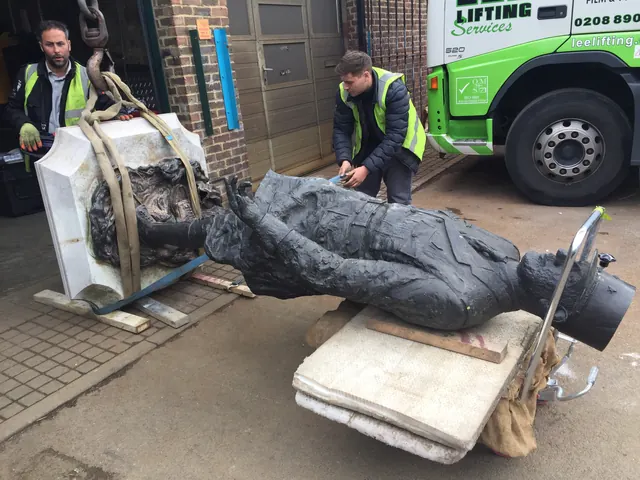
Captioned 'Restoration of Bronze Statue of Charles De Gaulle' at source.Named in source caption · Source page ↗ 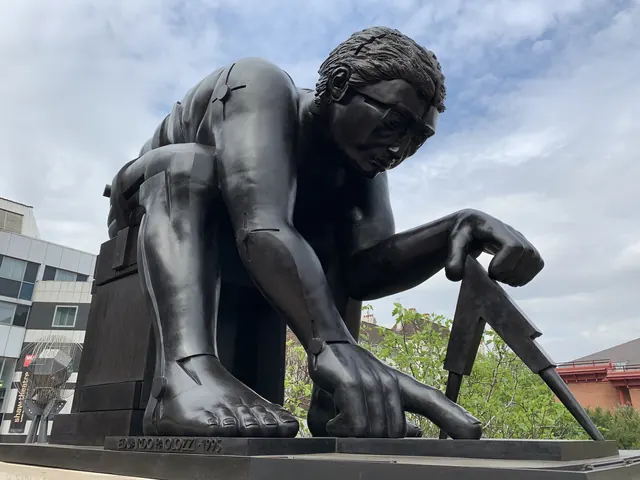
Captioned 'Isaac Newton, British Library' at source.Named in source caption · Source page ↗ 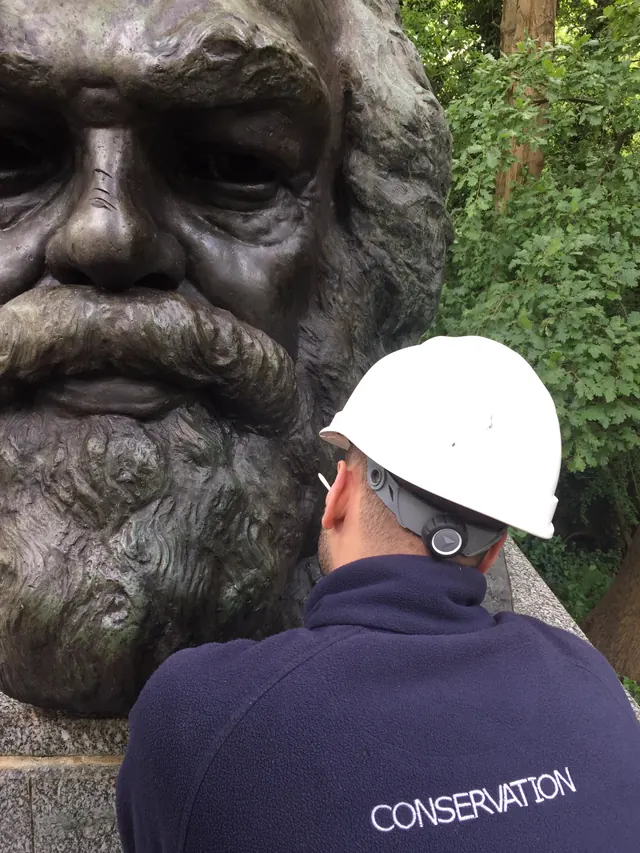
Captioned 'Karl Marx restoration' at source.Named in source caption · Source page ↗